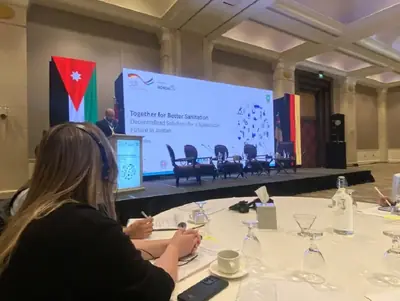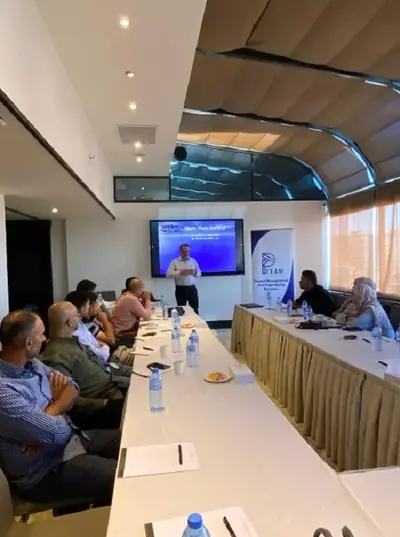
As part of a pilot initiative proposed by P. Service and adopted by UNICEF in 2022, a stakeholder workshop was convened to present the final outcomes of an innovative approach to improving water supply and demand management in District 11 of Zaatari Refugee Camp. The project was implemented by our team in partnership with the Canadian company BISAN Inc. and carried out in two phases.
During Phase I, the team conducted a comprehensive technical and operational assessment of the camp’s water system, including pumping and storage facilities. Through multi-criteria analysis, the most impacted district was selected for piloting. Field surveys and measurements informed the development and calibration of a hydraulic model, enabling extended-period simulations and validation of GIS and asset data. This phase identified key operational gaps and priority improvements to ensure equitable per capita distribution and minimum service standards.
In Phase II, the proposed interventions were implemented, including installation and commissioning of patented flow control valves. An awareness campaign was delivered in collaboration with the Royal Scientific Society (RSS) to address social perception risks and gather stakeholder feedback. The workshop concluded with lessons learned, scalability plans, revised rationing strategies, and a concept paper outlining municipal sector applications.